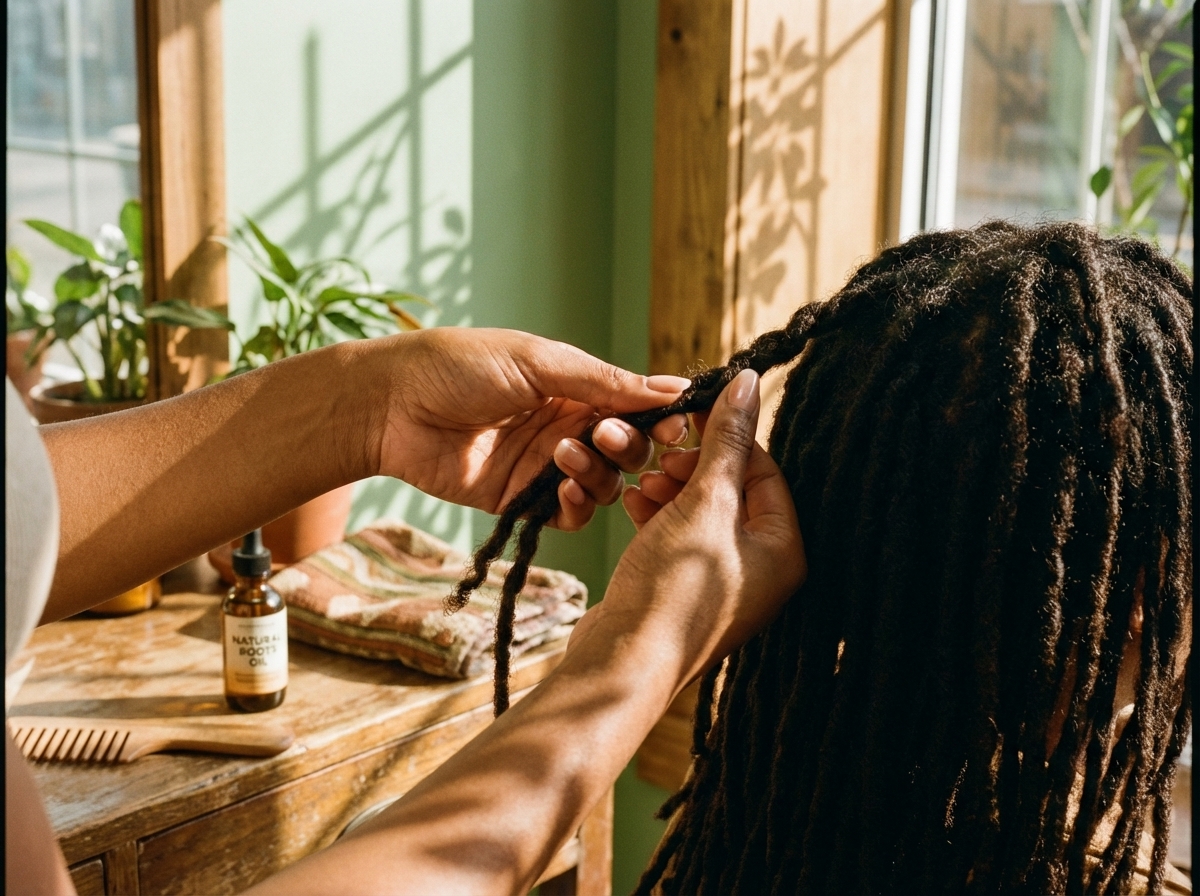
What Loc Transformations Actually Show (Beyond the Before & After)
Loc transformations get a lot of attention.
But most people are only looking at the surface.
They see the final style.
They see neat parts, shine, and length.
What they don’t see is what made that result possible.
Because real transformation is not cosmetic.
It’s structural.

What You’re Actually Looking At
When you see a strong loc result, you’re not just seeing a style.
You’re seeing the condition of the strand.
Hair is made up of three main layers:
-
the cuticle (outer layer)
-
the cortex (strength and elasticity)
-
and sometimes the medulla
When the cuticle is smooth and properly aligned, the hair can retain moisture and maintain strength.
When the cuticle is lifted or coated with residue:
-
moisture cannot enter properly
-
elasticity decreases
-
and the strand becomes more prone to breakage
So when you see locs that look full, balanced, and consistent, you’re looking at hair that has:
-
been properly cleansed to remove buildup
-
maintained internal moisture levels
-
and handled with controlled tension
That result is built over time—not created in one appointment.
Why Some Locs Don’t Respond the Same
Two people can have similar textures but completely different outcomes.
That difference comes down to condition—not just hair type.
Hair that is repeatedly coated with oils, creams, or heavy products develops buildup over time.
That buildup creates a barrier along the cuticle.
Once that barrier forms:
-
water cannot penetrate effectively
-
products sit on the surface
-
and the hair begins to feel dry even when products are applied
This is why many people experience:
-
dryness that doesn’t improve
-
dull appearance
-
stiffness or heaviness
In addition, inconsistent maintenance can lead to:
-
uneven tension at the root
-
weak points along the shaft
-
and thinning in high-stress areas like the crown and edges
Hair does not become unresponsive randomly.
It reflects how it has been treated over time.

Transformation vs Correction
Not every transformation is a simple improvement in appearance.
Many are corrective.
Corrective work addresses structural issues such as:
-
breakage caused by excessive tension
-
thinning due to improper parting or maintenance
-
buildup that has compacted inside the loc
-
dehydration that weakens the cortex
For example:
-
buildup increases the weight of the loc, which can stress the root
-
dehydration reduces elasticity, making the hair more likely to snap under tension
Before styling, these issues have to be addressed.
That process may include:
-
clarifying to remove residue
-
hydration treatments to restore flexibility
-
restructuring weak areas
-
and adjusting maintenance techniques
Styling without correction only improves the surface temporarily.
The internal condition remains unchanged.
Installation Is Only the Beginning
Starter locs, interlocking, and extensions are all methods of forming locs.
They do not determine long-term health on their own.
What matters is how the hair is prepared and maintained.
Key factors include:
-
the size and consistency of the parts
-
the amount of tension applied during installation
-
the condition of the scalp
-
and the client’s maintenance habits
Excessive tension during installation can damage the follicle over time, leading to thinning or permanent loss.
Inconsistent re-tightening or re-twisting schedules can create weak points where the hair is more likely to break.
Even extensions, when improperly matched in density or weight, can place additional stress on the root.
No method replaces proper care.
What Healthy Locs Actually Require
Healthy locs depend on consistent, structured care.
This includes:
Cleansing
-
Removes sweat, sebum, and product residue
-
Prevents buildup that blocks moisture
-
Supports scalp health and reduces irritation
Hydration
-
Water must be able to enter the strand
-
Hydrated hair maintains elasticity and flexibility
-
Reduces breakage during manipulation
Controlled Product Use
-
Excess oils and creams can accumulate inside locs
-
Leads to heaviness, odor, and dullness
-
Minimal, intentional use supports long-term health
Maintenance Timing
-
Regular re-twisting or interlocking maintains structure
-
Prevents matting at the root
-
Reduces uneven tension distribution
Scalp Care
-
A healthy scalp supports consistent hair growth
-
Inflammation, buildup, or dryness can disrupt the growth cycle
-
Addressing scalp issues early prevents long-term complications
Healthy locs are not low maintenance.
They require the right maintenance.

When It’s Time to Reassess
If your locs are:
-
feeling heavier than usual
-
not absorbing moisture
-
breaking or thinning
-
or showing increased frizz at the root
those are indicators of imbalance.
For example:
-
excessive frizz can signal weakened structure or lack of moisture
-
thinning at the crown may indicate repeated tension or stress
-
buildup can be identified by dullness, stiffness, or residue within the loc
Ignoring these signs allows the condition to progress.
Early assessment allows for correction before damage becomes more advanced.
Where to Start
If your hair is no longer responding the way it used to, the next step is not adding more.
It’s evaluation.
Understanding:
-
the condition of your scalp
-
the internal state of your hair
-
and your current maintenance pattern
allows for a targeted approach.
From there, decisions about:
-
detox
-
repair
-
maintenance adjustments
-
or installation
can be made with clarity.
If you’d like support determining what your locs need, start with a consultation.
Or begin with a system designed to support your hair between appointments.
Follow the Loc’d Affinity IG page for live transformations Locd_Affinity
Respect the biology. Then enhance the beauty.
Leave a Reply